
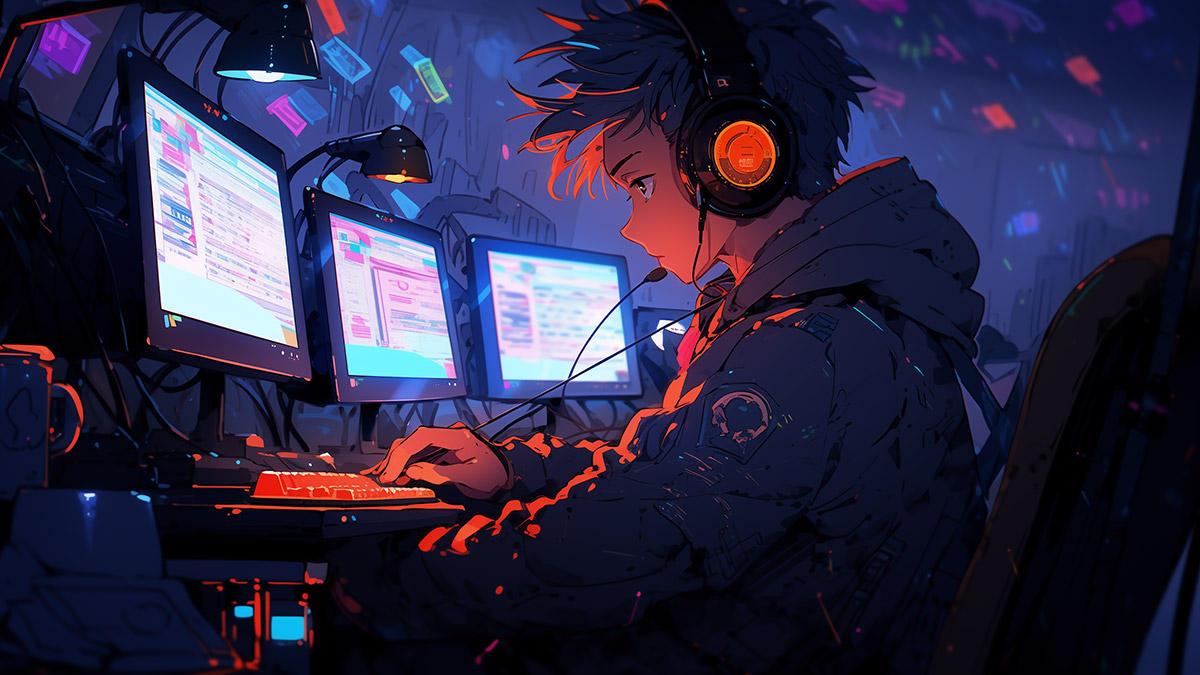
In the last few years, playing games online has become really popular in India. A recent report says that there are now 421 million people who play games online in the country. Out of these, 90-100 million play games frequently. The online gaming business is expected to grow to INR 23,100 crore (INR 231 billion) by 2025, with a yearly growth rate of 20%. This growth is because more people now have access to affordable smartphones, and the internet is more widely available at lower costs.
The Silent Architects of the Gaming Industry
Behind every gaming experience, there lies the craftsmanship of skilled coders, the architects of virtual space who transform ideas into playable masterpieces. Earlier, these Indian programmers were stuck in back-end development, software engineering, and IT services for global companies. However, with time, the gaming industry started booming, and with that the demand graph of Indian coders shifted immensely.
Indian coders found their niche. The journey began with small, passionate teams crafting mobile games that soon gained international recognition. Indian coders adapted the versatility by excelling in various aspects of game development, including programming, graphics design, and artificial intelligence. Mobile games further marked the beginning of a new era in India.
Soon after Ludo, the first mobile app game that was developed in India, the wave of the gaming era in India began. By striking a chord with Indian gamers’ interest with a game that is easy and finely amalgamates fun, familiarity and nostalgia, they paved the way for Indian game developers to tap into India’s vast and unique market, with likes/dislikes and interests of their own.
Challenges Faced Along the Way
Indian game developers frequently wrestle with framework challenges that influence the advancement interaction. The limited access to high-speed internet, powerful hardware, and advanced programming tools can hinder the smooth execution of creative ideas.
Additionally, the availability of the latest model of robust hardware is also a major concern. Many game developers struggle with outdated or less powerful computers, which can lead to slower rendering time and difficulties in handling complex graphics and animations. This limitation in hardware can restrict the ability to bring ambitious and visually stunning game concepts to life.
While progress has been made in resolving some of the major challenges related to high-speed internet connections, a significant hurdle still remains. The primary concern lies in the hardware infrastructure upon which the game will be built, and this aspect is yet to be adequately addressed. The efficiency and capabilities of the hardware play a crucial role in the development process, influencing factors such as rendering times, graphic complexity, and the overall quality of the gaming experience. As the industry strives for innovation and cutting-edge advancements, addressing the hardware limitations is essential to unlocking the full potential of game development in the digital era.
Due to outdated softwares and hardware, the games, which are based upon Hindu mythology and the epics of Mahabharata and Ramayana, faced tremendous challenges while developing them. These complex games needed advanced systems and bigger investments in terms of time and funds. After many such hardships, games like the Raji: An Ancient Epic, and Asura, were finally ready to be released in the market.
Breaking the Rules from Outsourcing to Innovation
Up until recently, gaming was perceived as a distraction and viewed in a negative light in India. However, perception has started to change for the better, and gaming has managed to reach a completely new level of acceptance.
From there, to playing games and creating a buzz of online streaming to actually processing the gaming program. The online stream was played on gaming applications that were developed by other countries. Pretty soon, the narrative shifted from followers to creators as Indian developers began producing original, globally recognized games.
The development or evolution was not limited to mobile gaming, as Indian coders were actively contributing to the development of PC games, leaving an impactful mark on the international gaming industry. The success stories of Indian game developers showcased their ability to compete on a global scale, challenging preconceived notions about the capabilities of the Indian gaming community.
Building Bridges: International Collaborations
Now, it was not just limited to the Indian audience; the gaming applications were exported to international markets as well. Our gaming applications were recognized by the external markets, and they were changing the horizons of the gaming industry. There were tie-ups between Indian game developers and international gaming studios. The exchange of ideas, expertise, and cultural influences resulted in the creation of games that resonated with diverse audiences worldwide.
The Bonfire: Forsaken Lands was a game that went viral not only in India but also in other countries. It played an important role in reshaping the image of Indian coders in the field of game development
Indian coders leveraged their unique perspectives and cultural richness to infuse authenticity and innovation into games. From storytelling to character design, the infusion of Indian elements into global gaming narratives contributed to the industry’s diversity and expanded the horizons of creative expression.
The Future of the Horizon
As Indian coders continue to make their mark in the gaming industry, the future holds immense promise. The burgeoning gaming ecosystem in India, coupled with the government’s support for the technology sector, provides a fertile ground for innovation and growth.
The advent of augmented reality (AR), virtual reality (VR), and the increasing emphasis on esports opens up new avenues for Indian coders to explore and excel. The gaming community in India is no longer confined to consuming content; they are also helping to decide where the gaming industry goes. They are actively involved in shaping how things work in the gaming world.
Conclusion
In summary, India’s gaming world has changed a lot in the last few years. People who make games in India face challenges, like not having fast internet and good computers. But they didn’t give up, and now they are making a big impact globally. From being seen as just game players, Indians are now also creating games that the world loves.
The journey involved not just mobile games but also PC games, challenging the idea that India can’t compete globally. Indian game creators added their own stories and designs, making games richer and more diverse. The future looks bright as Indian coders explore new technologies like AR, VR, and esports. With the government’s support and a growing gaming community, India is becoming a hub for creative and tech-savvy gamers, actively shaping the future of the gaming industry.
Comments are closed.